
It sounds like something out of a horror movie — a microscopic creature that enters through your nose and attacks your brain. But the “brain-eating amoeba”, as terrifying as it sounds, is real. Although infections are extremely rare, they are also incredibly deadly. In this article, we’ll break down what this amoeba is, how it infects humans, where it’s found, and most importantly, how to protect yourself.
What is the Brain-Eating Amoeba?
The so-called “brain-eating amoeba” is officially known as Naegleria fowleri (pronounced: nuh-GLEER-ee-uh FOW-ler-eye). It’s a single-celled organism that lives in warm freshwater environments like lakes, hot springs, and poorly maintained swimming pools. Despite the nickname, this amoeba doesn’t “eat” brains in the way you might imagine. It destroys brain tissue by releasing enzymes that break down cells, leading to inflammation and death.
Naegleria fowleri belongs to a group of organisms known as free-living amoebae — meaning they don’t need a host to survive. It has three life stages:
- Cyst (dormant form)
- Trophozoite (active feeding form)
- Flagellate (mobile form that swims)
The trophozoite is the dangerous stage that causes infection in humans.
How Does It Infect Humans?
Here’s the key point: you can’t get infected by drinking contaminated water.
Infection occurs when water containing Naegleria fowleri enters the body through the nose, typically during activities like:
- Swimming in warm freshwater lakes or rivers
- Diving or jumping into water
- Using untreated water for nasal irrigation (like neti pots)
Once inside the nose, the amoeba travels along the olfactory nerve to the brain, where it begins to destroy brain tissue. This leads to a rare condition called Primary Amoebic Meningoencephalitis (PAM) — a severe and often fatal brain infection.
Symptoms and Progression
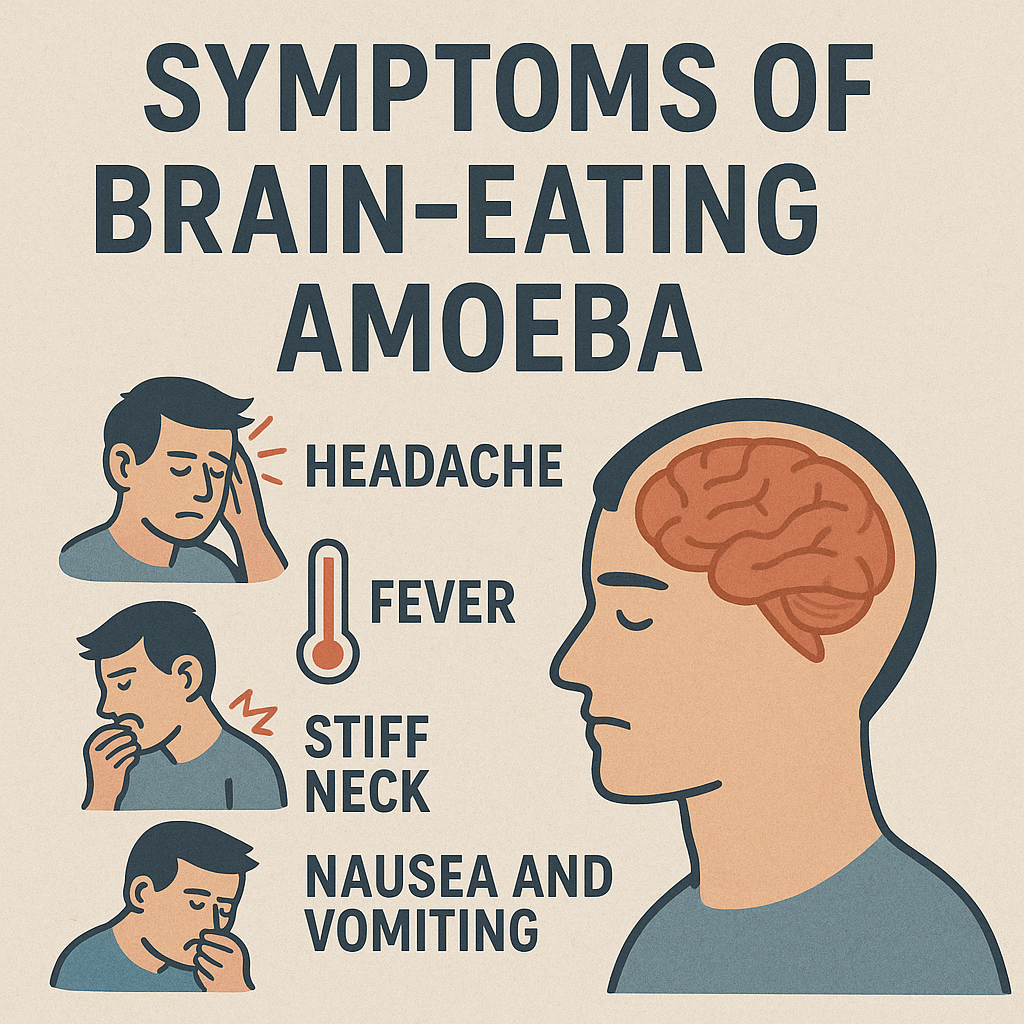
Symptoms of PAM typically begin 1 to 9 days after exposure and can include:
- Sudden fever
- Headache (especially behind the eyes)
- Nausea or vomiting
- Stiff neck
- Confusion or hallucinations
- Seizures
- Coma
Because these symptoms resemble bacterial meningitis, diagnosis is often delayed — which is part of what makes the infection so dangerous.
The disease progresses rapidly, and death can occur within 5 days of symptom onset.
How Common is This? Should You Be Worried?
This is where things get a little reassuring. Naegleria fowleri infections are extremely rare. According to the U.S. Centers for Disease Control and Prevention (CDC):
- From 1962 to 2023, there have been only 160 known infections in the United States.
- Almost all cases involved warm freshwater activities in southern states, particularly Texas and Florida.
- Most cases occur in the summer, when water temperatures are highest.
To put it in perspective: your chances of getting struck by lightning are higher than your chances of contracting PAM.
However, the fatality rate is over 97%, with only a handful of known survivors worldwide. That’s why awareness and prevention are so important.
Recent Cases That Made Headlines
Several tragic cases have made news in recent years:
- In 2020, a 6-year-old boy in Texas died after playing in a splash pad, leading to the temporary shutdown of the city’s water system.
- In 2022, a Missouri man died after swimming in a lake at a state park.
- In 2023, a Florida man reportedly died after rinsing his sinuses with tap water containing the amoeba.
These incidents, though rare, serve as reminders of the importance of understanding the risks — especially in warmer regions.
How Can You Protect Yourself?
You don’t need to panic, but it’s wise to take precautions, especially when swimming in warm, untreated freshwater. Here’s what health experts recommend:
✅ Prevention Tips:
- Avoid jumping or diving into warm freshwater lakes or rivers, particularly during hot weather.
- Keep your head above water when swimming in such environments.
- Don’t disturb sediment in shallow, warm freshwater — the amoeba tends to reside there.
- Use only sterile, distilled, or previously boiled water if you’re rinsing your sinuses or using a neti pot.
- Avoid swimming in untreated water tanks or hot springs.
If you live in a warm climate, especially in the southern U.S. or parts of South Asia, these tips are particularly important during the summer.
Diagnosis and Treatment: Is There a Cure?
Here’s the challenge: by the time PAM is diagnosed, it’s usually too late. But that’s starting to change.
Treatment involves a combination of antifungal and antimicrobial medications, often including:
- Amphotericin B (an antifungal)
- Miltefosine (an investigational drug originally used for leishmaniasis)
- Rifampin and azithromycin (antibiotics)
A few survivors have been documented thanks to early diagnosis, aggressive treatment, and induced hypothermia (cooling the body to slow brain damage).
Still, because the disease progresses so quickly, prevention remains the best defense.
Expert Opinions and Scientific Insights
According to Dr. Jennifer Cope, a CDC expert on waterborne diseases:
“While Naegleria fowleri infections are rare, they’re devastating. We encourage awareness, not fear. Most water exposure is safe — but a few precautions can go a long way.”
Studies also suggest that climate change may be increasing the range of this amoeba, with cases appearing in more northern regions where the water is warming.
Final Thoughts: Don’t Fear the Water — Just Be Smart
The idea of a brain-eating amoeba is undeniably chilling. But it’s important to put the risk in perspective. Millions of people swim in freshwater every year without getting sick. The key is knowing where the risk lies and how to reduce it.
If you love water activities, you don’t have to stop. Just be mindful — especially when temperatures are high, or water quality is questionable. Awareness, not avoidance, is the real solution.